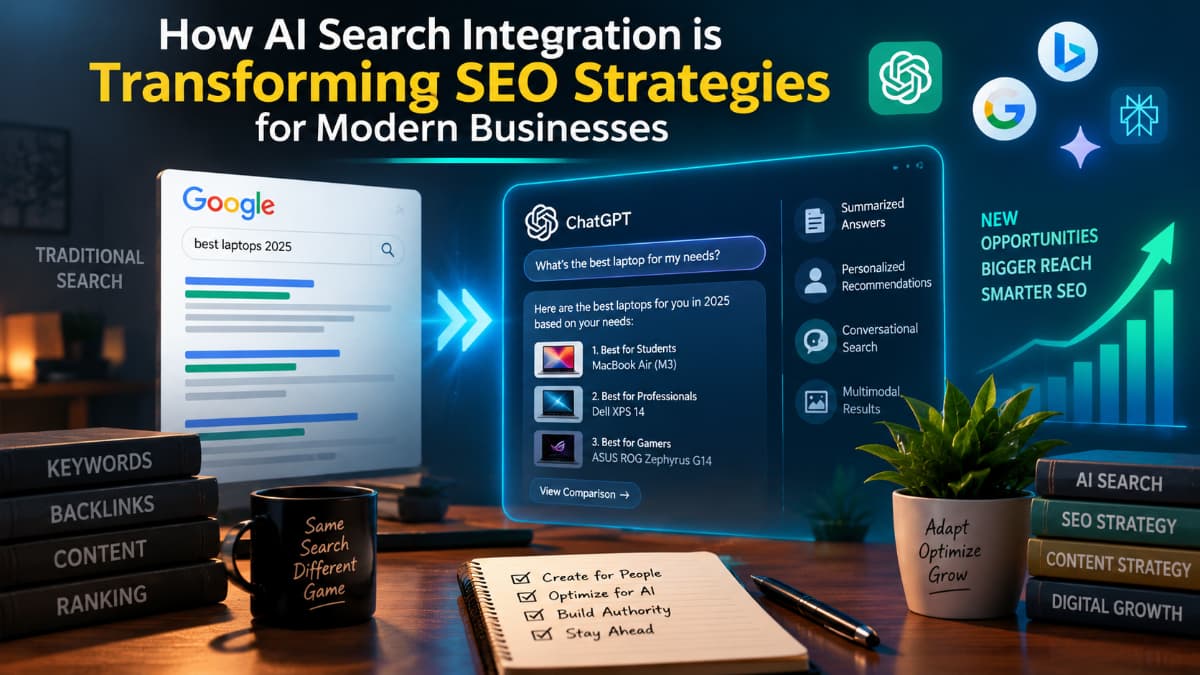
The mechanics of online search have undergone a radical transformation. As we navigate through 2026, the traditional list of blue hyperlinks has been largely superseded by immediate, generative answers. For modern businesses, this shift represents both a significant challenge and an unprecedented opportunity. AI search integration is completely rewiring digital visibility, forcing marketing teams to rethink how they connect with potential customers and restructure their online presence for maximum impact.
The Rapid Shift from Search to Answers
The fundamental behaviour of internet users is changing at a rapid pace. According to recent industry forecasts, traditional search engine volume will drop 25% by 2026, with search marketing losing substantial market share to AI chatbots and virtual agents. This bold prediction has quickly become an industry reality. Alternative platforms are experiencing exponential growth, with independent answer engines now processing upwards of 1.5 billion queries per month globally. This transition proves that users prefer concise, synthesised responses over sifting through dozens of individual web pages.
Furthermore, nearly 35% of Gen Z users now rely primarily on conversational AI rather than traditional search engines to research products and services. This sweeping behavioural shift is driving the widespread adoption of Answer Engine Optimization. Instead of simply trying to rank on a generic results page, proactive brands must now focus on structuring their website content specifically for AI extraction and direct citation.
Adapting Your Technical Infrastructure
Recent tracking data reveals that generative AI overviews are now triggered on approximately 48% of all global search queries. When these overviews appear, traditional position-one organic links can lose over half of their expected click-through rate. However, there is a promising silver lining. Brands that are successfully cited as source material directly within these AI summaries actually earn 35% more organic clicks than their uncited competitors. Achieving this requires a flawless technical foundation. Websites must be fast, highly structured, and rich in clear data markups that large language models can easily parse. Navigating these complex technical shifts is rarely a do-it-yourself project for a growing business. To bridge this technical gap, many startups now partner with an experienced digital marketing agency to audit their current framework and implement advanced data structuring protocols. Upgrading your infrastructure proactively ensures that your brand remains visible to the web crawlers feeding tomorrow's answer engines.
Scaling Content Production Responsibly
Feeding these hungry AI algorithms requires a consistent output of high-quality, authoritative content. Many businesses are turning to automated tools to keep pace with these new demands. Early adoption of AI in search strategies is yielding significant financial returns, with many companies reporting a higher return on investment after integrating analytical tools into their daily publishing workflows.
However, there is a delicate balance to strike when deploying these technologies. Relying entirely on raw, unedited machine output can quickly degrade your brand voice and alienate your core audience. For those looking to scale production safely, there are excellent resources available, such as this comprehensive guide to maximising content marketing using the AI article spinner, which provides actionable advice on driving efficiency while maintaining originality. Human oversight remains a crucial element of any successful campaign. Your content must still offer unique insights, personal experiences, and genuine value that an automated system cannot replicate on its own.
Core Strategies for the Generative Search Era
Thriving in this new environment requires a multifaceted, highly adaptable approach. While AI search tools heavily dominate top-of-funnel informational queries, traditional organic search still vastly outperforms AI platforms in driving direct consumer conversions and high-value sales.
To maintain a competitive edge throughout this transition, businesses should focus on the following foundational strategies:
Implement a hybrid approach: Do not abandon traditional SEO entirely. Instead, run it alongside targeted Answer Engine Optimization campaigns to capture both conversational and transactional traffic effectively.
Prioritise structured data: Use comprehensive schema markup to clearly define your content, making it much easier for large language models to understand and accurately cite your key facts.
Focus on original research: Answer engines inherently prioritise primary sources. Publishing original data, detailed case studies, and expert interviews will increase your chances of being selected as a definitive citation.
Monitor referral traffic: Regularly track which specific language models and chatbots are driving users to your site to better tailor your future content creation and outreach efforts.
The future of digital marketing belongs to those who are willing to adapt. By understanding the mechanics of AI search integration and restructuring your digital presence accordingly, your business can turn potential traffic disruptions into powerful new avenues for sustainable growth and long-term brand authority.