Key Takeaways
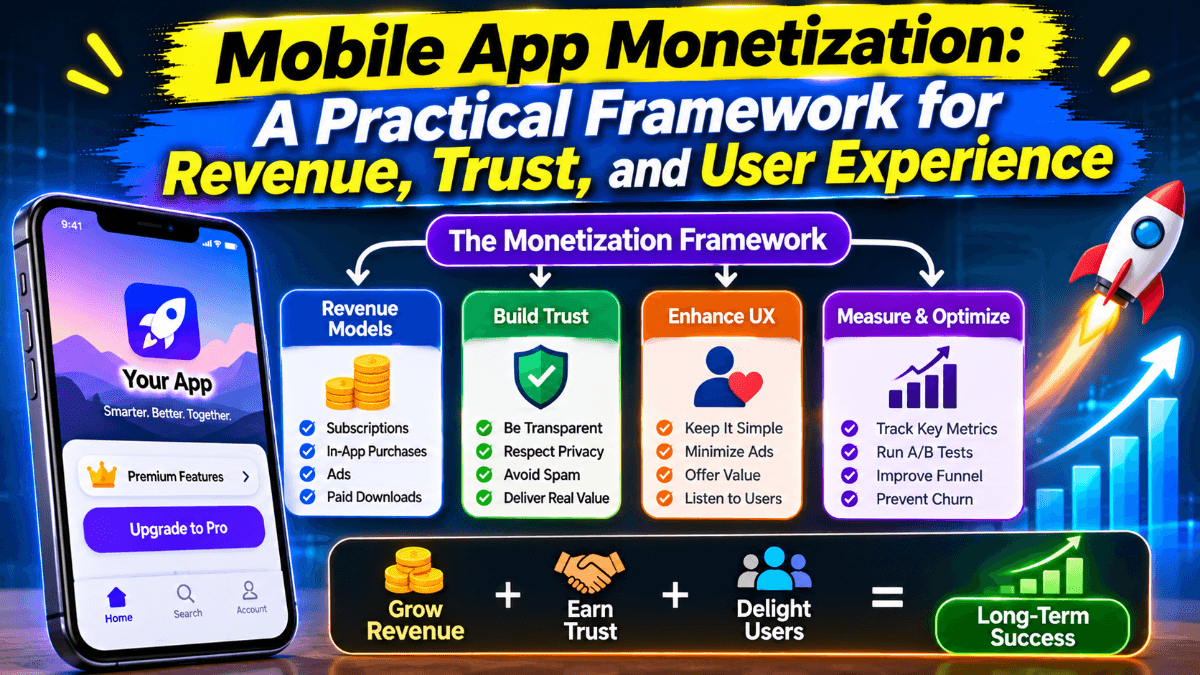
- Effective mobile monetization balances revenue goals with user experience, trust, and long-term retention.
- Advertising, subscriptions, in-app purchases, one-time purchases, and sponsorships should align with the app’s purpose and audience.
- Thoughtful ad placement, reasonable frequency, and clear value exchanges help reduce interruptions and ad fatigue.
- Transparent privacy disclosures, meaningful user choices, and limited data collection strengthen trust.
- Tracking revenue alongside engagement, retention, churn, refunds, and user feedback provides a clearer picture of monetization performance.
- Controlled testing helps publishers improve ad formats, timing, and placement while monitoring potential negative effects.
- Sustainable monetization focuses on earning revenue while giving users compelling reasons to keep using the app.
Mobile monetization works best when it supports the reason people downloaded the app in the first place. Whether an app is free, paid, subscription-based, or supported by advertising, the goal is not simply to create more transactions. It is to create a sustainable exchange of value. Thoughtful app monetization strategies help publishers balance revenue goals with a fast, useful, and trustworthy experience.
A strong plan considers the full user journey, from the first session through repeat use and renewal. Ads, paid upgrades, subscriptions, and in-app purchases can all have a role, but each should appear at a moment that makes sense for the user. When monetization interrupts a core task or feels unclear, even a short-term lift can create lasting friction.
Table Of Contents
- Why Monetization Needs a Balanced Plan
- What Users Expect From App Ads
- Choosing the Right Revenue Mix
- Protecting Privacy Without Losing Insight
- Improving Ad Quality and Placement
- Measuring More Than Revenue
- A Step-by-Step Monetization Audit
- Common Mistakes to Avoid
- Frequently Asked Questions
1. Why Monetization Needs a Balanced Plan
Relying on a single revenue source can make an app more vulnerable to changes in user behavior, pricing expectations, or demand. A free game may combine rewarded ads with optional purchases. A productivity app may offer a useful free tier and reserve advanced workflows for subscribers. A focused utility may be better suited to a one-time purchase.
The key is to assess revenue relative to retained users, not just individual impressions or purchases. For example, a game may earn more over time by placing fewer ads at natural breaks than by showing frequent interruptions that shorten sessions or encourage uninstalls.
2. What Users Expect From App Ads
Users are more likely to tolerate advertising when the value exchange is understandable. An ad that appears after a completed level, between articles, or in exchange for an optional reward is easier to accept than one that blocks a task without warning. The broad category of mobile advertising includes formats such as banners, videos, and ads embedded within app content, but the format alone does not determine whether the experience feels appropriate.
Review ad timing, frequency, sound settings, loading behavior, and relevance. A basic user-experience check should ask:
- Does the ad appear at a natural pause?
- Can the user close or skip it when appropriate?
- Does it cover important content or controls?
- Does it fit the app’s audience and visual environment?
- Does it load without noticeably slowing the experience?
3. Choosing the Right Revenue Mix
Different app categories call for different approaches. The right model follows the product’s ongoing value, user intent, and frequency of use.
- Advertising: Often fits high-use free apps where users receive clear value without paying upfront. The main risk is ad fatigue.
- Subscriptions: Can fit apps that provide continuing content, services, storage, or regularly updated tools. The challenge is giving users a clear reason to renew.
- In-app purchases: Work well for optional content, enhancements, and features that users can evaluate before buying. Poorly timed prompts can feel like a barrier.
- One-time purchases: Suit focused utilities and products with a defined, durable purpose. They provide simplicity but do not generate recurring revenue on their own.
- Sponsorships or partner features: May fit apps with a clear audience, provided the relationship is disclosed and the feature remains useful.
A blended model can give users choices. For example, free users may see limited ads, frequent users may receive an upgrade offer, and paying users may receive an ad-free experience or expanded features.
4. Protecting Privacy Without Losing Insight
Privacy is part of the product experience, not a separate compliance task. Clear disclosures, meaningful choices, and limited collection help users understand what happens to their information. The FTC’s privacy and security guidance emphasizes the importance of honoring privacy promises, collecting what is needed, and safeguarding sensitive data.
Publishers should review third-party tools as carefully as their own code. A practical review includes listing the collected data, identifying the partners who receive it, removing fields without a clear purpose, checking default settings before releases, and explaining choices in plain language. Contextual advertising can also provide an option when user-level tracking is limited or unnecessary.
5. Improving Ad Quality and Placement
Ad quality matters as much as ad volume. Banners can provide a persistent but limited placement, while interstitial ads take over the screen and require more caution. Rewarded ads are often best when users actively choose to view them for a defined benefit. Native placements should remain visibly distinguishable from editorial or product content, and video ads should not begin with unexpected sound.
Test one variable at a time, such as placement, frequency, creative type, or reward value. Review ads for misleading claims, accidental-click designs, poor loading performance, and content that conflicts with the app’s audience. A weak placement can generate complaints, negative reviews, and support requests that outweigh its immediate revenue.
6. Measuring More Than Revenue
Revenue alone does not show whether monetization is healthy. Review financial, product, and user signals together, including:
- Revenue per daily active user and ad impressions per active user
- Fill rate, click-through rate, and conversion rate
- Session length and day-one, day-seven, and day-thirty retention
- Uninstall rate, subscription renewal rate, and purchase refunds
- Crash rate, ad-load errors, ratings, reviews, and support complaints
A revenue lift should be evaluated against changes in retention and sentiment. If a new placement increases revenue but sharply reduces repeat use, it may weaken long-term value.
7. A Step-by-Step Monetization Audit
- Map the journey. Mark every ad, paywall, offer, and purchase request.
- Group users by behavior. Compare new, loyal, paying, and inactive users.
- Review the revenue mix. Identify steady contributors and high-friction areas.
- Check privacy settings. Confirm that collection and disclosures match user choices.
- Run controlled tests. Change placement, timing, format, or frequency one at a time.
- Study retention. Compare revenue results with engagement and churn signals.
- Keep what earns trust. Remove placements that add little value but disrupt the experience.
8. Common Mistakes to Avoid
- Showing ads before users understand the app’s value.
- Using the same frequency for every user and session type.
- Ignoring slow ad loads, failures, and app stability issues.
- Using vague consent language or unclear privacy controls.
- Choosing a model that does not fit the app’s core purpose.
- Testing several major changes at once.
- Optimizing short-term revenue while overlooking retention and reviews.
Conclusion
Sustainable mobile app monetization comes from creating value users are willing to support, whether through advertising, subscriptions, purchases, or a combination of models. By respecting privacy, refining ad placements, and measuring revenue alongside retention and user satisfaction, publishers can make smarter decisions without compromising the experience that keeps people coming back. The strongest monetization strategy doesn't just generate revenue today; it gives users a reason to stay tomorrow.
Frequently Asked Questions3 FAQs
Quick answers to common questions about this topic
The best model depends on the audience, product value, and usage pattern. Many apps benefit from combining free access with advertising, optional purchases, or subscriptions.
There is no universal number. The appropriate level depends on session length, format, user intent, and retention data.
Yes. Contextual advertising, subscriptions, one-time purchases, sponsorships, and paid upgrades can all reduce reliance on user-level tracking.