Social media has become an important channel for entertainment and media businesses to share content, promote events, attract audiences, and build brand awareness. From newspapers and digital publishers to event organizers, creative agencies, and entertainment companies, businesses use platforms such as Instagram to connect with audiences and keep them informed about new content and experiences.
However, managing social media campaigns consistently can be challenging. Creating posts, planning publishing schedules, tracking engagement, and understanding audience preferences require time and organization. A structured social media marketing strategy helps businesses manage these activities while making informed decisions about their content.
Why Social Media Marketing Matters for Entertainment and Media
Entertainment and media businesses depend on audience attention. Whether promoting an upcoming event, sharing a news update, announcing a new publication, or highlighting a creative project, social media provides an opportunity to reach existing followers and introduce content to new audiences.
Visual content is particularly useful for communicating stories quickly. Event organizers can share promotional images, publishers can create informative carousels, and entertainment brands can use short-form videos to showcase highlights or behind-the-scenes moments.
Consistent publishing also helps businesses maintain an active presence. Rather than posting only when a major announcement occurs, brands can plan a content calendar that balances promotions, informative updates, audience interaction, and brand storytelling.
Common Social Media Marketing Challenges
Entertainment and media teams often work with changing schedules, multiple campaigns, and frequent content updates. Managing these activities manually can lead to inconsistent posting and missed promotional opportunities.
Another challenge is measuring performance. Likes alone do not reveal the complete picture of audience engagement. Businesses may also need to understand reach, views, comments, shares, saves, and engagement rates to evaluate whether their content is connecting with the intended audience.
Limited visibility across different content formats can make planning difficult. A video may generate strong reach, while a carousel may encourage more saves or shares. Without organized reporting, identifying these patterns becomes harder.
A useful social media marketing solution should simplify publishing, support different content formats, and provide meaningful performance insights.
Five Social Media Marketing Strategies for Entertainment and Media Businesses
1. Build a Consistent Content Calendar
A content calendar helps businesses organize their publishing schedule around events, launches, announcements, and audience interests.
For example, an event organizer can publish an announcement, introduce performers, share preparation updates, and post event highlights. A digital publisher can plan content around upcoming articles, interviews, and important industry developments.
Planning content in advance gives teams more time to review creative assets, maintain brand consistency, and coordinate promotional activities. It also helps reduce last-minute publishing pressure.
2. Use Multiple Instagram Content Formats
Different content formats serve different communication goals. Single-image posts can highlight announcements, promotional graphics, or important updates. Carousel posts can explain a topic across several slides, introduce multiple event features, or summarize useful information.
Reels can showcase event highlights, short interviews, and behind-the-scenes footage. Stories are useful for timely announcements, reminders, and temporary promotional content.
Entertainment and media businesses should choose formats according to the message, audience, and campaign objective rather than relying on one format for every post.
3. Promote Events and New Content Strategically
Social media can support campaigns for event registrations, ticket sales, new publications, subscriptions, and sponsored content.
An event management business might publish a promotional Reel, follow it with a carousel describing the event experience, and use Stories to share reminders before registration closes.
Similarly, a media company can introduce a new content series through a sequence of posts that explain its purpose and highlight individual episodes or articles.
Clear calls to action help audiences understand what to do next, whether that means visiting a website, registering for an event, reading an article, or subscribing to a newsletter.
4. Analyze Engagement to Improve Content
Tracking social media performance helps businesses understand which topics and formats attract attention.
Useful metrics can include reach, views, likes, comments, shares, saves, and engagement rate. Comparing results across content formats can reveal whether audiences respond more strongly to informative carousels, promotional images, or short-form videos.
Marketing Star provides an Instagram campaign analytics dashboard that organizes available performance metrics by content format. Teams can review charts and tables, apply date filters, and examine derived indicators to better understand campaign performance.
These insights can help businesses refine future content plans instead of relying entirely on assumptions.
5. Coordinate Social Media with Other Marketing Channels
Social media campaigns can become more useful when coordinated with email, SMS, WhatsApp, and landing pages.
For example, an event organizer can promote an event on Instagram and direct interested audiences to a registration landing page. An online publisher can use social posts to attract readers while using an email newsletter to distribute new articles to subscribers.
Marketing Star brings Instagram marketing together with capabilities such as email campaigns, SMS, WhatsApp, QR codes, and web forms. This allows businesses to coordinate different customer touchpoints within a broader marketing strategy.
Simplify Social Media Management with Marketing Star
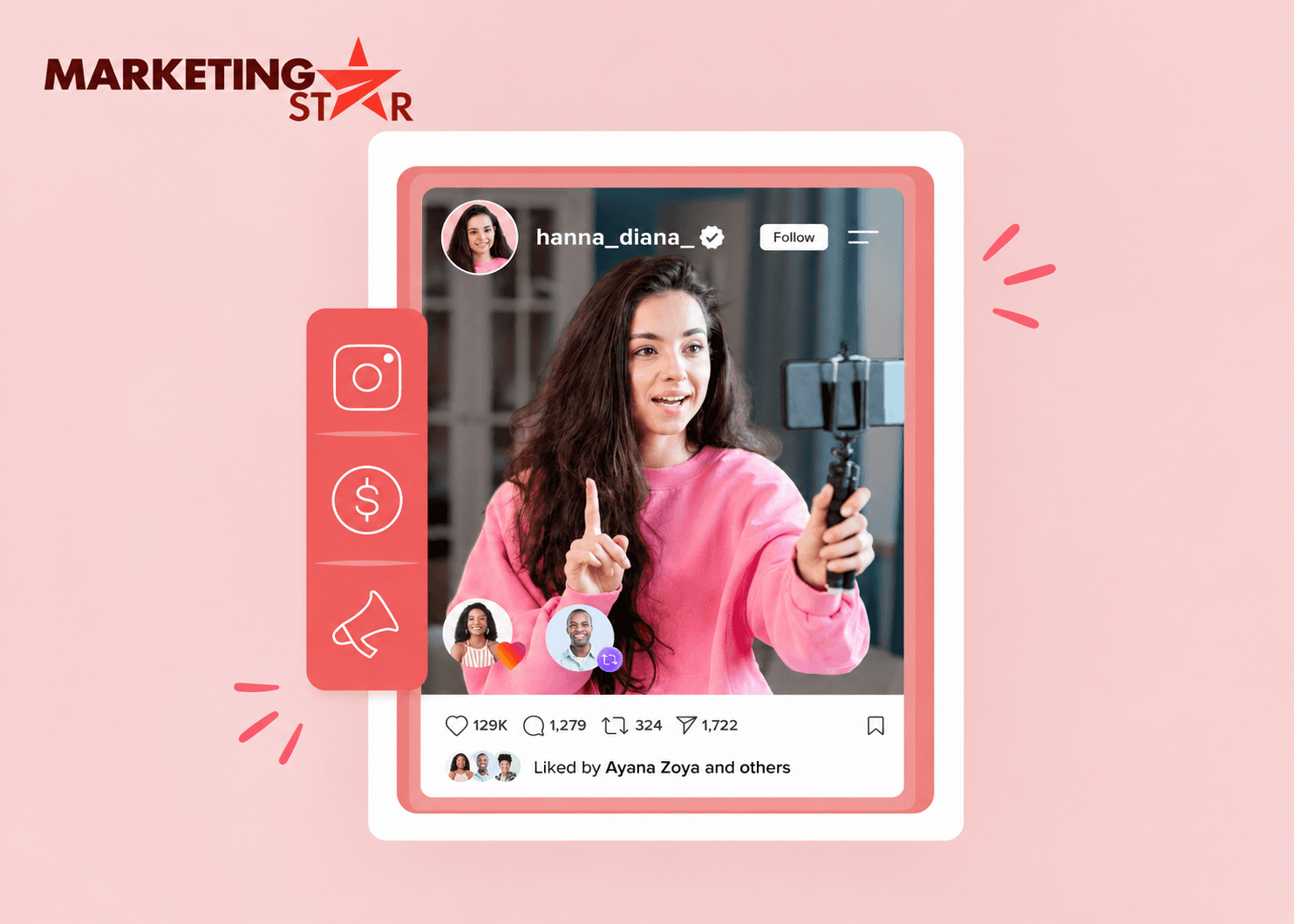
Managing Instagram content across separate planning, publishing, and reporting tools can add unnecessary work. Marketing Star offers a centralized platform for planning, creating, scheduling, publishing, and analyzing supported Instagram content.
Businesses can manage single-image posts, carousel posts, Reels, and Stories through a unified interface. Content can be scheduled for future publication or published immediately, helping teams organize campaigns and maintain a consistent presence.
The Instagram analytics dashboard provides visibility into available metrics and format-specific performance indicators. Teams can use these insights to identify content patterns, evaluate engagement, and make more informed publishing decisions.
By combining social media management with other marketing capabilities, Marketing Star helps businesses reduce tool switching and organize customer engagement activities more efficiently.
Conclusion
Social media marketing gives entertainment and media businesses a practical way to promote content, engage audiences, and support event and subscription campaigns. Consistent publishing, varied content formats, clear calls to action, and regular performance analysis can help create a more effective strategy.
With Instagram publishing, scheduling, and analytics capabilities, Marketing Star helps businesses manage their social media activities from one platform. By combining these tools with broader multichannel marketing, entertainment and media brands can build more coordinated campaigns and create meaningful audience experiences.