"Where do I find products to sell" is usually the first question a new online seller asks, and it's also the question with the most genuinely different answers depending on what the seller is actually optimizing for. Cheapest unit cost, fastest time to market, most differentiated positioning, and lowest operational complexity point toward different sourcing models \ and a lot of first-time sellers pick a model based on what's easiest to understand rather than what fits their actual goal.
There's no universally "best" sourcing route. There's a best route for a specific combination of budget, timeline, and how differentiated the seller wants to be from everyone else selling a similar product.
Wholesale and Local Distributors: Fast, But Rarely Differentiated
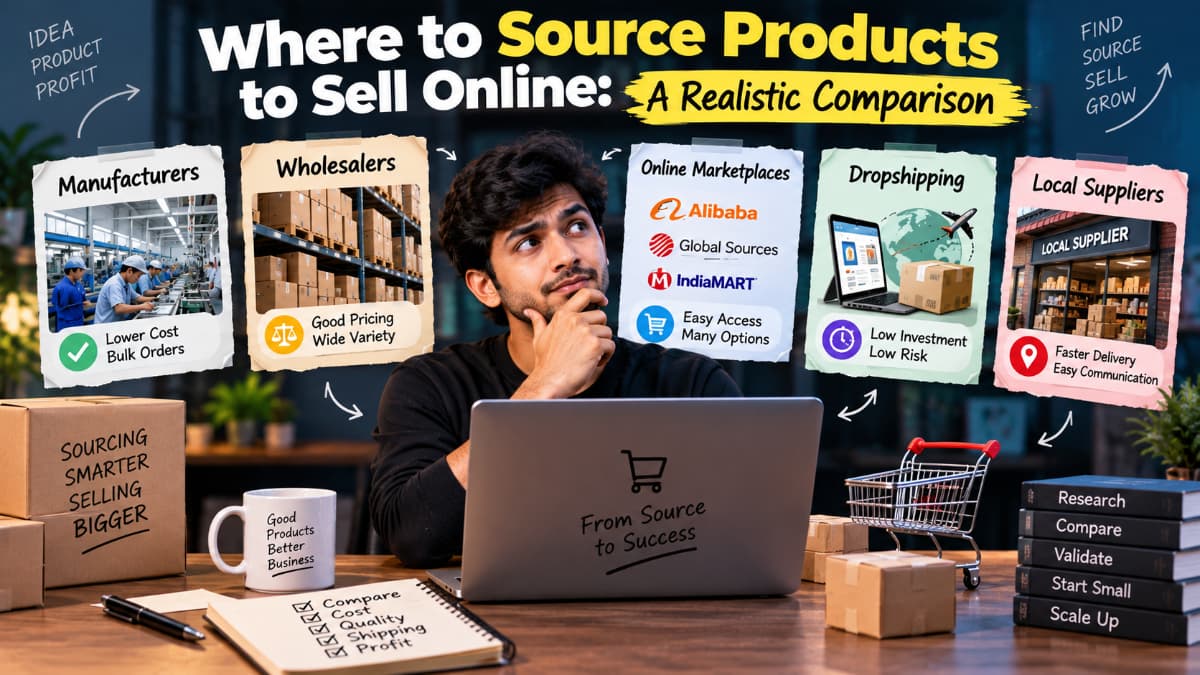
Buying from a domestic wholesaler or distributor is the fastest way to get sellable inventory often within days, with no manufacturing lead time and typically lower minimum order quantities than going direct to a factory. The trade-off is differentiation: if a product is available through a local wholesaler, it's very likely already being sold by several other sellers, which usually pushes competition toward price rather than brand or positioning.
This route suits sellers testing demand quickly, or building a marketplace-first business where price competitiveness matters more than brand story. It's a weaker fit for anyone trying to build a distinct, ownable brand over time.
Direct Import: Better Margins, More Operational Weight
Sourcing directly from an overseas manufacturer most commonly through China typically improves margins meaningfully over buying from a domestic wholesaler, since it removes a layer of markup. It also adds real operational weight: minimum order quantities, freight logistics, customs clearance, and quality control all become the seller's direct responsibility rather than someone else's.
This route rewards sellers who've validated demand for a product already (often having sold a wholesale or dropship version first) and are ready to commit working capital to a bulk order with a longer cash-conversion cycle than instant wholesale restocking allows.
Private Label and OEM: The Slowest Path, and the Only One That Builds Equity
Private labels putting a brand's own name and packaging on a manufacturer's base product and full OEM development, where the formulation or design itself is custom, take the longest to bring to market and require the most upfront coordination with a factory. They're also the only sourcing routes that build something a seller actually owns beyond the sale itself: a recognizable brand, defensible packaging and positioning, and eventually the ability to charge a premium that pure resellers of an identical wholesale product structurally can't.
This route only makes sense once demand for the general product category has already been validated through a faster, lower-commitment sourcing method first. Going straight to private label on an unproven product concept concentrates a large amount of risk into a single, slow-to-reverse decision.
Matching the Route to the Actual Goal
A useful way to choose is working backward from the actual business goal rather than forward from whichever sourcing method is easiest to research. A seller testing whether a product category sells at all should start wholesale or dropship fast, low commitment, and reversible if demand doesn't materialize. A seller who's already validated demand and wants better margins should consider direct import once volume justifies the added logistics. A seller building a long-term brand, not just a product listing, should be planning toward private label or OEM from the start, even if the first products sold are sourced a faster way while that brand groundwork gets built.
This sequencing decision and the operational shift each stage requires is exactly where sellers benefit from an outside perspective. Working with an experienced product sourcing consultant Thailand sellers use to map this path tends to prevent the common trap of committing to private label capital before demand is proven, or staying on wholesale margins long after the business could support something more differentiated.
Practical Takeaways
Choose a sourcing route based on your actual goal speed, margin, or brand equity not by default to whichever method is easiest to research first
Validate demand through a fast, low-commitment method (wholesale or dropship) before committing capital to direct import or private label
Expect direct import to improve margin but add real logistics and quality-control responsibility that wholesale sourcing doesn't require
Treat private label and OEM as the slowest but only sourcing routes that build lasting brand equity worth planning toward even if not the first step
Revisit the sourcing model as the business matures; the right choice at launch is rarely the right choice a year in
This article reflects general sourcing patterns for online sellers in Thailand. The right model for a specific product and budget should be assessed on its own merits.