Renovating a home is a journey that often starts with intense excitement and quickly descends into a complex logistics nightmare. We all know the drill: hours spent scrolling through interior design blogs, collecting mood boards, and imagining the final result. However, the harsh reality of construction is that most projects fail to meet expectations simply because there is a massive gap between what we imagine and what is physically built. This mismatch leads to expensive mistakes—purchasing furniture that is just slightly too large for the room, misjudging the flow of movement, or choosing a color palette that looks entirely different once the paint dries and the natural light changes. This is why 3D visualization has shifted from being an exclusive tool for professional architects to an essential part of the modern home improvement toolkit. By planning ahead in a digital environment, you can turn a chaotic construction site into a calculated success. If you are ready to approach your renovation with the same foresight as a professional designer, exploring digital ecosystems like 3D Rush is the perfect starting point to secure your vision before a single nail is hammered.
The true power of visualization lies in its ability to serve as a "digital sandbox." Instead of guessing, you can simulate the reality of your future home. At the beginning of the planning phase, you do not need to model every detail from scratch; you need to test concepts. This is where you can leverage free 3D models to build out your initial layouts. Whether you are experimenting with the placement of a dining table or testing where a new lighting fixture would look best, these assets allow you to "try before you buy." It is a process of trial and error that costs nothing but time, yet it saves you thousands of dollars that would otherwise be wasted on incorrect furniture choices or bad spatial flow. You get to play with your home’s layout in a virtual environment, identifying potential bottlenecks or awkward corners long before they become real-world problems.
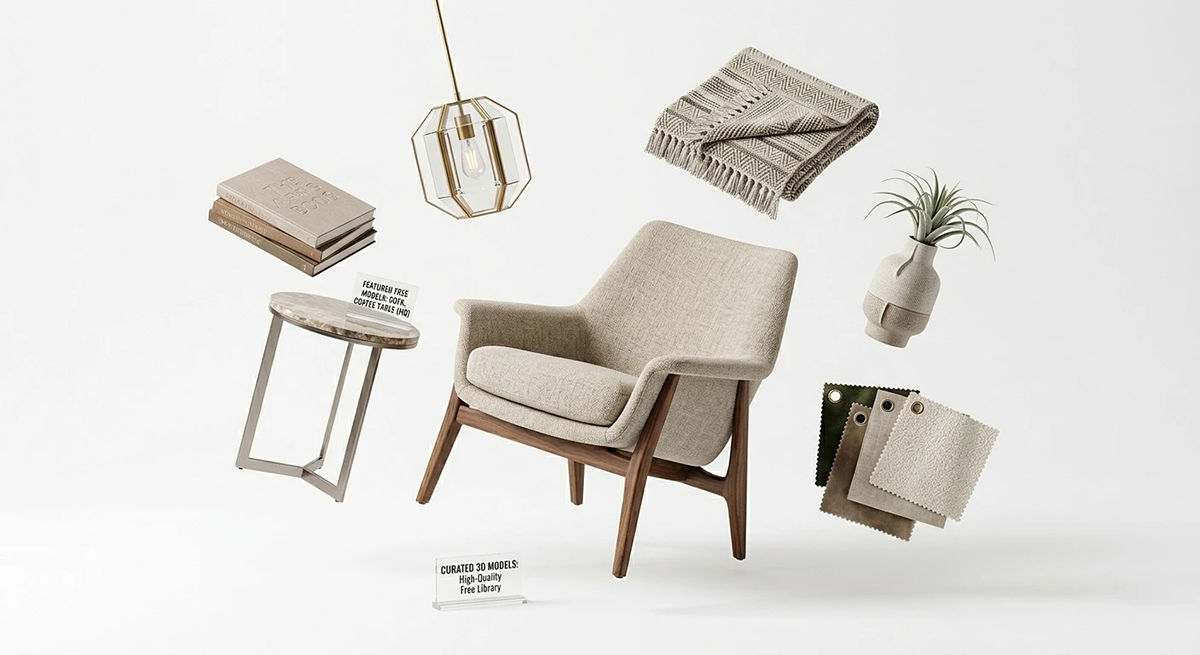
However, once you have decided on a layout, the focus must shift to the fine details. A rendering is only as reliable as the assets that define it. This is where the importance of scale and fidelity comes into play. If your digital plan uses low-quality assets with incorrect dimensions, your blueprint is flawed. To ensure that your digital mockup actually matches the real-world scale of your apartment or house, you should utilize professional 3D models. These are not just decorative objects; they are geometrically accurate representations of furniture that allow you to understand true proportions. When you see a chair or a wardrobe in your 3D plan, you are seeing its actual impact on the square footage of your room. This precision prevents the common mistake of overcrowding a living room or ignoring the necessary clearance space in a kitchen, ensuring that your final design is as functional as it is beautiful.
Ultimately, a successful renovation is a significant investment, and your goal should be to maximize that return. Moving from intuitive, "gut-feeling" planning to visual, data-driven design changes the entire psychology of the process. You are no longer gambling on whether a design will work; you are executing a verified plan. Visualization provides a sense of control that turns the renovation process from a stressful struggle into a structured, creative experience. It allows you to make confident decisions, knowing that the lighting will be adequate, the proportions are correct, and the flow is logical. By integrating these professional digital tools into your renovation workflow, you are not just building a room; you are crafting a home that feels exactly as you imagined it. It is the smartest way to ensure that your dream house becomes a reality, down to the very last detail, long before the construction work is complete.