On September 7, 2016, Apple walked onto the stage and introduced the iPhone 7. It had a better camera, stereo speakers, water resistance and a new design.
But there was one thing missing.
The 3.5mm headphone jack.
Apple's Phil Schiller famously described the decision with one word: “Courage.”
The internet was not impressed. Memes flooded in. "Courage" became a punchline. And for years, most of us accepted Apple's official reasoning — a thinner phone, better waterproofing, and improved audio - because, well, what other choice did we have?
For decades, the 3.5mm headphone jack had been one of the most universal connectors in consumer electronics. You could plug your headphones into a phone, laptop, car stereo, music player or airplane entertainment system.
No pairing.
No Bluetooth settings.
No battery.
Just plug it in and listen.
So why would Apple remove something that seemed to work perfectly?
Was it really about making the iPhone thinner?
Was it about water resistance?
Or was Apple preparing customers for something much bigger?
The answer is more interesting than any single explanation.
The Immortal Port: A Brief History of the 3.5mm Jack
Before we get to the excuses, it's worth appreciating just how old the 3.5mm headphone jack actually is. It didn't start with phones. It didn't even start with music.
The jack traces back to the 1870s, when telephone switchboard operators used plug-based connectors to manually route calls. That same connector family eventually made its way into audio equipment, and from there it rode out more than a century of technological upheaval almost untouched.
Two world wars came and went. Radio gave way to the Walkman, the Walkman gave way to the iPod, and the iPod gave way to the iPhone. Music itself transformed — from cassette tapes to CDs to streaming. Through all of it, the humble headphone jack stayed exactly the same: no charging, no pairing, no latency, no drama.
Then, in 2016, Apple decided 150 years of reliability wasn't reason enough to keep it around.
The Three Excuses — and Why They Don't Add Up
When Apple pulled the headphone jack from the iPhone 7, the company offered three justifications. Each one sounds reasonable on the surface. Each one falls apart the moment you check it against the facts.
Excuse #1: "It makes the phone thinner"
This is the most repeated justification — and the easiest to disprove. The iPhone 7, which shipped without a headphone jack, was actually thicker than the iPhone 6s, which had one. If Apple's real goal was a slimmer phone, removing the jack didn't even accomplish that.
Excuse #2: "We needed the space for waterproofing"
Two years before Apple made this claim, Sony had already launched the Xperia Z3 — a fully IP68 waterproof phone that still had a headphone jack. If a rival manufacturer could achieve full waterproofing without sacrificing the port, the "we had no choice" argument doesn't survive contact with reality.
Excuse #3: "It's for better audio quality"
This is arguably the boldest excuse of the three, because it's backwards. Bluetooth audio relies on compression, which reduces sound quality and introduces latency. A wired 3.5mm connection delivers uncompressed, lossless audio with none of that overhead. Apple didn't upgrade the audio experience by removing the jack — it downgraded it, then marketed the downgrade as progress.
Three excuses. Three holes big enough to drive a truck through.
So, if none of the official reasons were true, what was actually going on?
The Timing of AirPods Wasn't a Coincidence
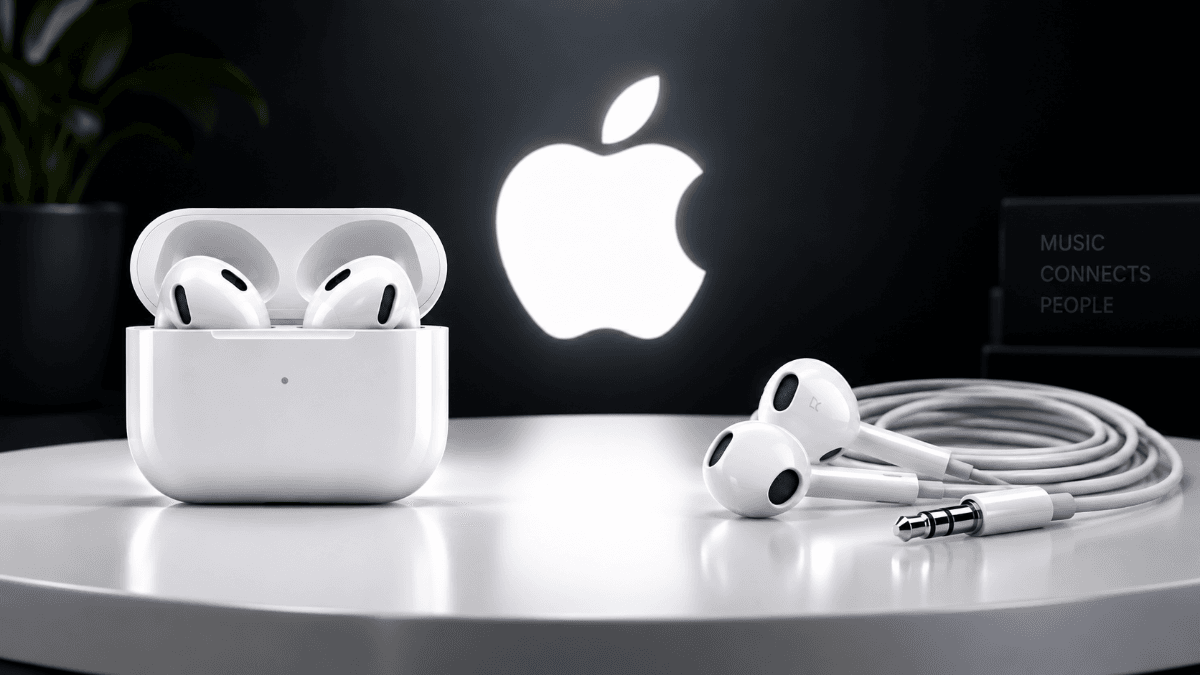
Apple removed the headphone jack in September 2016. And at essentially the same moment, Apple introduced AirPods. A wireless earbuds priced at $159, or roughly ₹13,000–15,000 in India.
Think about what actually happened here: a company removed a free, universal accessory port from its flagship product, and in the same breath, introduced a premium product designed to replace exactly what it had just taken away.
That's not a coincidence. That's a business strategy with a launch date attached.
The $15 Billion Business That Couldn't Exist with a Free Alternative
Within a few years, AirPods went from a widely mocked accessory — remember the jokes about looking like electric toothbrush heads? — to a business generating an estimated $15 billion in annual revenue. For context, that's more than Spotify's total revenue.
But here's the part that matters that business model was never possible as long as a free, wired headphone jack existed in every iPhone. Why would anyone pay $159 for wireless earbuds when a perfectly good pair came in the box for free?
Apple didn't just launch a new product. It removed the free alternative first, then sold the paid replacement. That sequencing is the whole strategy.
The Hidden Commission Machine: MFi Licensing
The AirPods story alone is compelling, but it's not the full picture. There's a second, quieter piece of this puzzle: Apple's MFi program (Made for iPhone).
Any company that wants to manufacture Lightning or USB-C headphones for the iPhone has to pay Apple a licensing commission on every single unit sold. The 3.5mm jack, by contrast, was an open industry standard — nobody paid Apple a cent to make headphones for it.
Put simply: removing the headphone jack didn't just open a market for Apple's own AirPods. It also closed off a commission-free zone that had existed for over a century and replaced it with one where Apple takes a cut of nearly every accessory made for its ecosystem.
Samsung Mocked It - Then Quietly Did the Same Thing
If this were purely an Apple story, it would already be interesting. But the most telling detail might be what happened next.
Samsung ran ad campaigns openly mocking Apple's decision to drop the headphone jack. It was an easy win - consumers were frustrated, and Samsung positioned itself as the brand that "listens."
Then, in 2019, Samsung quietly removed the headphone jack from its own flagship phones. And in an unusually candid bit of self-awareness, the company deleted the very ads it had used to mock Apple in the first place.
One by one, most other Android manufacturers followed the same path - not because of a technical breakthrough that suddenly made the jack obsolete, but because the business incentives were the same for everyone.
Courage or Capitalist Masterclass?
When Apple removed the headphone jack, it wasn't an engineering failure - it was a masterclass in behavioural modification and hardware monetization. Apple said removing the headphone jack required "courage." In hindsight, maybe that word was more accurate than anyone realized — just not in the way Apple meant it.
It takes a certain kind of courage to tell your customers a change is "for their benefit," then charge them $159 for something that used to come free in the box.
This pattern isn't unique to headphone jacks. It shows up whenever a company removes a convenient, free, or open option and replaces it with a paid, proprietary one: charging cables, cloud storage tiers, printer ink cartridges — the list keeps growing.
The lesson isn't that Apple is uniquely villainous. It's that "this is better for you" is a claim worth pausing on. The next time a company frames an inconvenience as an improvement, it's worth asking one simple question: better for whom — you, or their revenue?
Frequently Asked Questions5 FAQs
Quick answers to common questions about this topic
No. The iPhone 7, which lacked a headphone jack, was slightly thicker than the iPhone 6s, which had one.
Yes. Sony's Xperia Z3 achieved full IP68 waterproofing in 2014 — two years before Apple removed the jack — while keeping the headphone jack intact.
No. Bluetooth compresses audio data, which can reduce sound quality and introduce latency, while a wired 3.5mm connection delivers uncompressed, lossless audio.
Estimates put AirPods' annual revenue at around $15 billion, making it one of Apple's most successful accessory lines — larger than Spotify's total annual revenue.
MFi (Made for iPhone) is Apple's licensing program that requires third-party accessory makers to pay a commission for Lightning or USB-C headphones designed for iPhones — unlike the open 3.5mm standard.